How to use Pocket Bard: An Easy Guide to Adding Ambience to your Game
Your Attention Belongs at the Table
If you’re anything like me, when you’re running a TTRPG you often reach for the term immersion as a good heuristic for how much enjoyment potential a session has. A more immersive experience sounds like it has the chance to be a better experience - more satisfying, more engaging, more happy-feelings. What Immersion Is deserves a separate post altogether. I want to show you how you can use Pocket Bard to easily and intuitively boost immersion in your next session. Everything here could easily apply to your game this Friday night.
Here’s the thing, though - the actual instructions fit into one sentence:
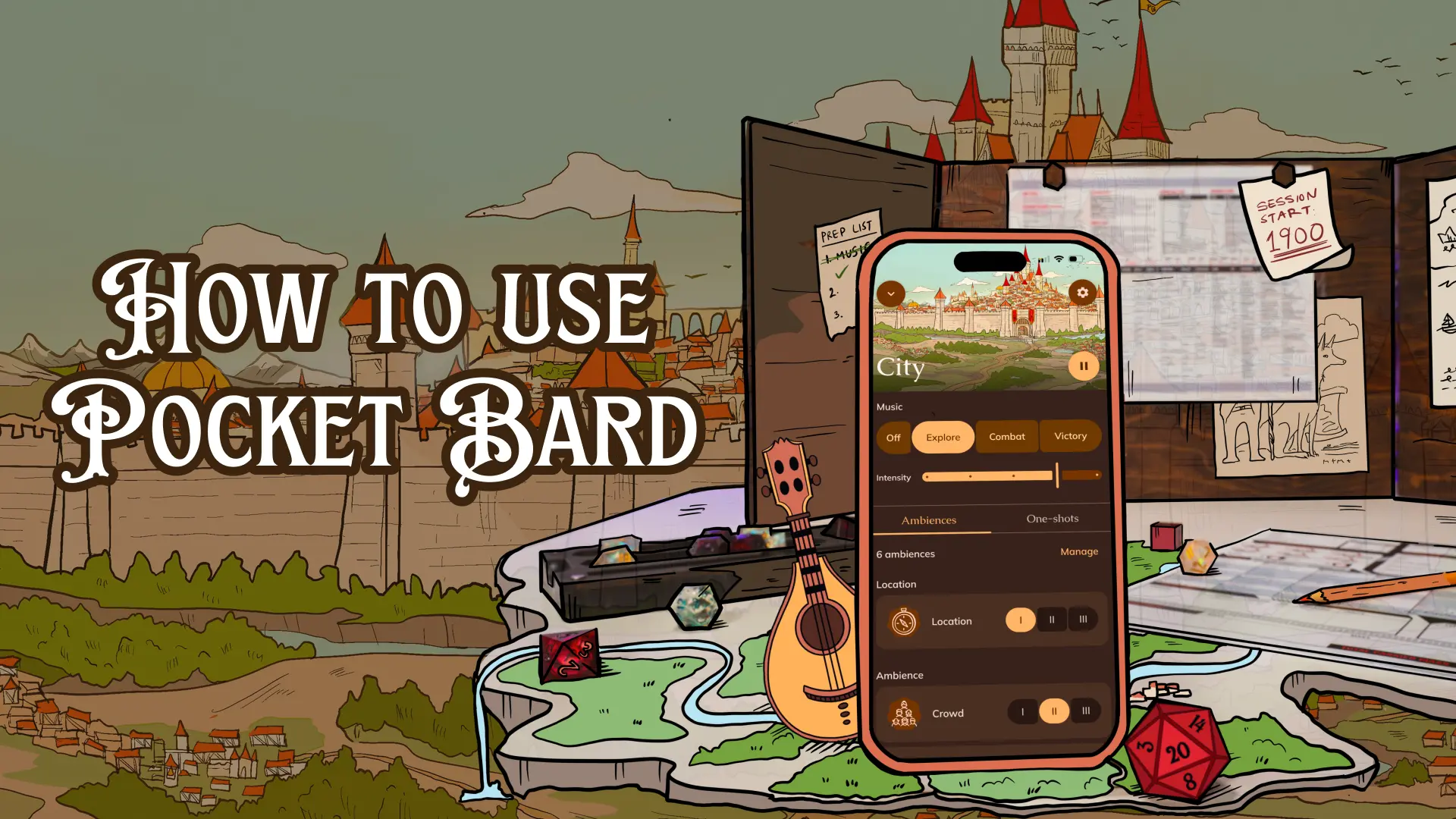
Open the app, pick a scene that matches where the party is, and nudge the Intensity Slider when the action changes.
That’s it.
We specifically built it so that’s it.
So the rest of this guide isn’t about how to use the app. It’s about using audio well at the table with three basic ideas:
- Start with the basics: a simple setup covers 90% of what you actually need from audio
- Treat audio as a sidekick: it supports the fiction, it’s never the star of the show
- Protect your attention: the point of all of this is your story, not the soundboard.

Keep It Simple - Start with the Basics
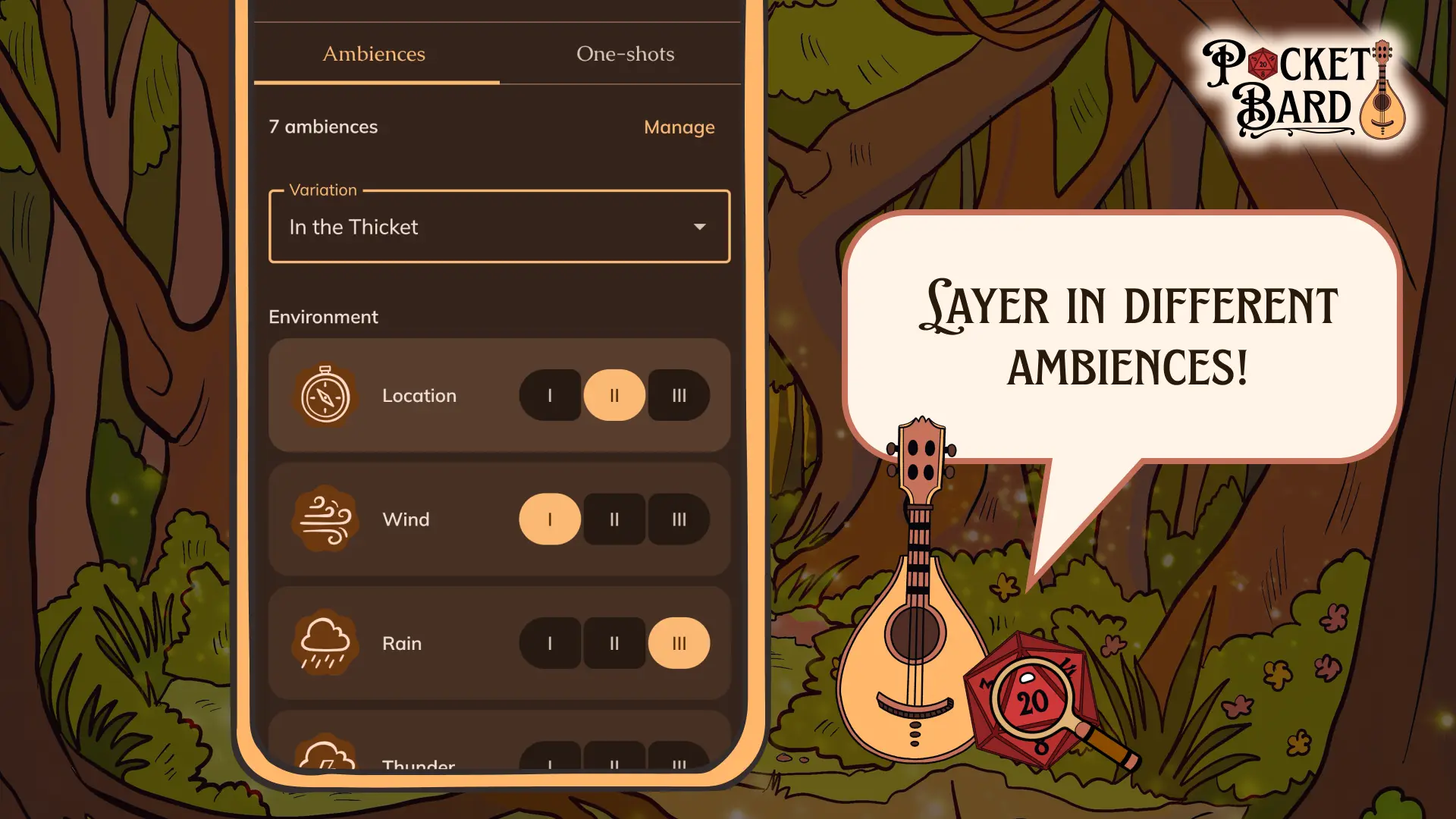
Audio comes roughly in three layers, each with their own job. First, and arguably most important, is Ambience. Ambient sounds indicate the setting. Subtle effects like gentle wind through the leaves, echoing drips of water in a cave, or the murmur of a crowd really help cultivate the mental imagery you want to conjure in the minds of your players.
Second is Music. If Ambience tells everyone where you are, music sets the tone for how it feels. The difference between dread and wonder doesn’t always need to be explained, it can be shown by a shift in music.
Finally, One-Shot sound effects can be treated like a fine garnish. A well-placed Boom as the backstabbing general reveals his plans can foreshadow the next scene beautifully and keep everyone’s rapt attention. Alternatively, trying to punctuate every action with the right sound effect can throw the whole experience by shifting everyone’s attention away from the game itself.
A complete setup here could be one scene, just below conversational volume, with just a few ambient effects playing. Use the Intensity Slider to keep up as things change, and switch from Explore to Combat music modes if a fight or chase scene breaks out.
The bottom line: A simple setup with just enough room to adapt as things change beats a complicated setup 9 times out of 10.
Treat Audio as a Sidekick
Audio has a job at the table, but so do you - and that’s running your game. A few easy tips can help you avoid pitfalls and enhance the experience with very little extra effort:
First, never center-stage the soundscape. When I was in school, we used to laugh about the harsh reality of being a sound-designer: 99% of the time, if you’re doing your job well, nobody notices (because it just feels right).
- Set the volume a little lower than feels right (it’ll feel right when things settle). If anyone raises their voice to be heard, it’s too loud.
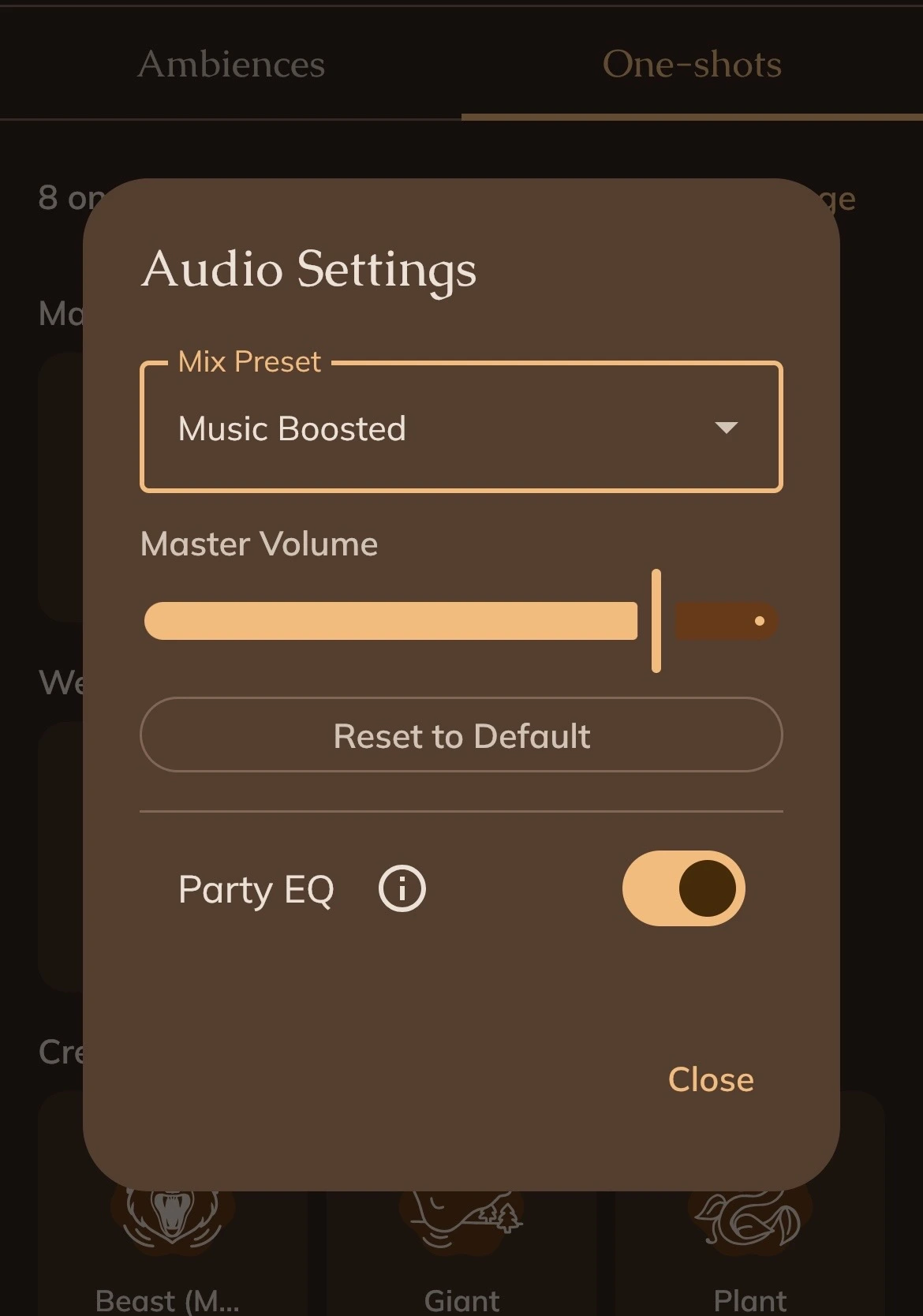
- Pocket Bard’s Party EQ is included to help shape certain frequencies to make it a little easier to talk over the music…
Next, remember that silence is a tool. OFF is a legitimate setting - and we say that as the people who make the sounds. We deliberately included a prominent “OFF” button for the music because some moments don’t need music. Maybe a dramatic post-fight exhale just needs the whistle of the wind, or maybe the opening statements of the trial deserve empty room-tone while the opposing attorney sweats.
Finally, lean into serendipitous sync. Trust the musical process and savor the moments when the music hits just right. That’s what creates lasting memories. You’ll never forget the moment that the drums came in right as the BBEG’s second-phase triggered, but you will regret the session you tried to make that moment land by switching to a specific song and killing the flow.
In the end, just remember: don’t focus on the music as the experience itself. Treat your soundscape as the frame that makes the rest of the experience more vivid.
Protect Your Attention
Especially with modern distractions, undivided attention can sometimes be the scarcest resource at the table. Of course, you don’t need to hand-wring over each and every second, but demonstrating presence at the table is a great way to engage the attention of your players. I have a few ways I think about this when it comes to music and ambience:
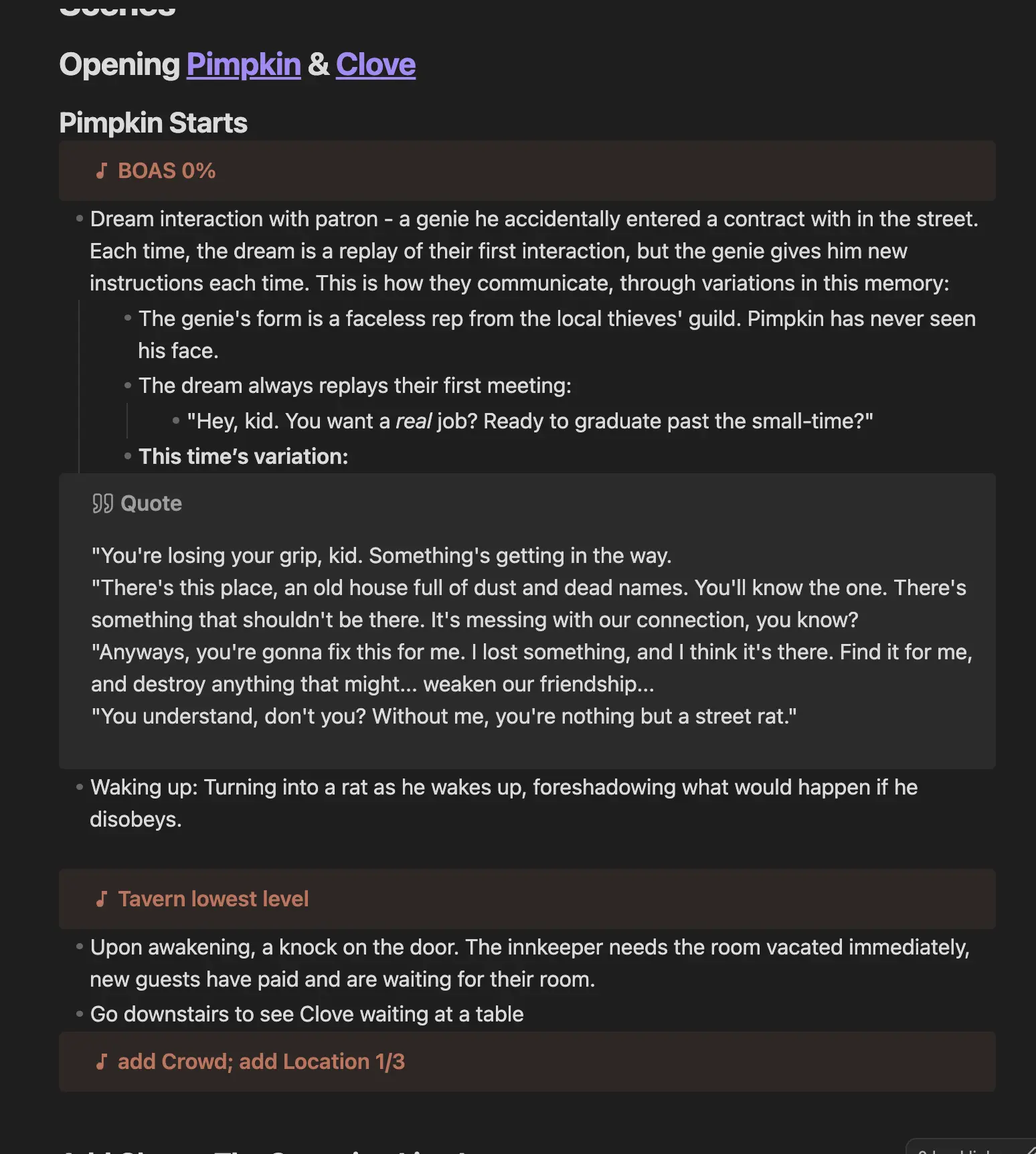
Decide First. When I prep my games, I typically have Pocket Bard open and spend a few seconds selecting a rough soundscape. It doesn’t have to be perfect, but it certainly makes it easier at the table when things get chaotic. Below is a screenshot of my GM notes from the opening session of a game I ran last year for some of the Pocket Bard crew at work. I went the extra mile to make a custom callout in Obsidian, but anything that makes it easy to spot is probably good!
Decide Fast. Don’t prep what can be improvised - I love this wisdom from The Alexandrian because it’s one of those things that seems obvious but certainly wasn’t obvious to me until I read it. When you’re deciding how to change the soundscape when the unexpected happens, don’t shoot for perfection. Deciding fast on something “good enough” often lands just as well for your players. That being said, this definitely gets easier over time. Sometimes it leads to wise little gems, like the fact that a lot of deep-space Sci-Fi music works great for underwater scenes.
Don’t Decide at All - On top of all of that, one of the things I hear a lot of people getting good results with is delegating audio entirely to another player. Try handing Pocket Bard to someone else, and not only is your job easier, you’ve also handed someone at the table a huge incentive to keep their head in the story.
Conclusion
So, try this at your next session: pick a scene, start some ambience, and let the music play, pushing and pulling the Intensity until it feels right. Maybe even music OFF, if you dare! At some point, if your table is anything like mine, you’ll notice the difference and never look back.
That’s the experience we’re building Pocket Bard for - simple, supporting, and out of the way, so you can focus on what matters most: your story!