What is Immersion, Anyway?
Hello beautiful Bards! So, I just recently finished up grad school studying game design, and despite the fact that I work as a sound and music maker for TTRPG’s, focusing on “immersive audio made simple,” I have a secret: at school, I was known as being pretty “anti-immersion.” [Loud audible, crowd-sized gasp] I know, I know! Have I been lying to you this whole time? Am I secretly at Pocket Bard with a master plan to create thoroughly un-immersive experiences? Luckily enough, the answer, at least as far as I know, is strongly “no.” I love creating stories that sweep people off of their feet, music that transports us to another world, and most importantly, playing pretend and making funny voices with a bunch of my adult friends. But then what could it mean that I am also “anti-immersion?”
Well, I’ll give it to you straight. I am anti-immersion in the sense that I think immersion is just a buzzword to most people! Immersive this, immersive that, here’s immersion with a hat. But what is this thing? Clearly there’s something to it, we all feel it! But honestly, I have yet to find definitions of immersion that I think truly capture it. But in this post, I’ll do my best to bring you, dear reader, some of the finest offerings I have come across so far, and together, maybe (just maybe) we will be able to find some sort of truth, to separate the music from the noise. Or maybe, we may find that perhaps we lack the vocabulary altogether; that definitions of the mind may not be able to accurately capture the feelings of the heart.
Hamlet on the Holodeck
Despite TTRPG’s slightly predating narrative video games, as far as I can find, our use of the word “immersion” specifically goes back to Janet Murray’s 1997 Hamlet on the Holodeck, one of the earliest speculative treatises on interactive storytelling. Like this article puts forth, Murray describes how the commonality of “visual pageantry” connects modern forms of cultural storytelling to historic practices; the use of smoke and mirrors and other effects to enhance the suspension of disbelief for an audience. Murray chooses “immersion” in particular as per to its relationship with water: to immerse oneself into a story is akin to submerging into a pool of water, where the senses are enwrapped by their surroundings. Thus we come to maybe the most colloquial understanding of immersion; a teleportation into a realm of make believe, where you are invested in the world as if it were your own. A state of mind similar to how Mihaly Csikszentmihalyi defines “Flow” (in his 1990 book of the same name) as “the state in which individuals are so involved in an activity that nothing else seems to matter.”
To Murray’s credit, I think this understanding of immersion is an intriguing foundation, but leaves me with many questions to further investigate. For example, how does this account for experiences that blur the lines between the real world and fiction? With the water metaphor in mind, I imagine a sequence of bobbing my head in and out of a pool in rapid succession over and over again every time I leave the table to go take a bathroom break, or make a pop culture reference to clarify what an NPC looks like, or when experiencing any sort of “bleed” between my character and myself. On a related note, and maybe more importantly for our discussion, what does this understanding of immersion have to say about the difference between my experience playing a single-player video game, where I am often the sole participant interacting through a controller, versus a TTRPG, where I am engaging with a group of real people, using my literal body, my actual words, and deciding outcomes with magic rocks and a bunch of human brains?
Embodied Play
Csikszentmihalyi, referenced briefly above, actually seemed interested in the body as well. Though he describes much of flow in the body as an exertion with goals of optimization, he also considers the joy we get from using our eyes to look at art, our mouths to taste delicious food, or even our ears to listen to music, to be a part of a flow state. Funnily enough, he cites someone describing seeing as related to immersion in water, saying it, “resembles the shock a body feels when diving into a pool of cold water,” so now we have two nickels for “ideas around immersion that have to do with water.”
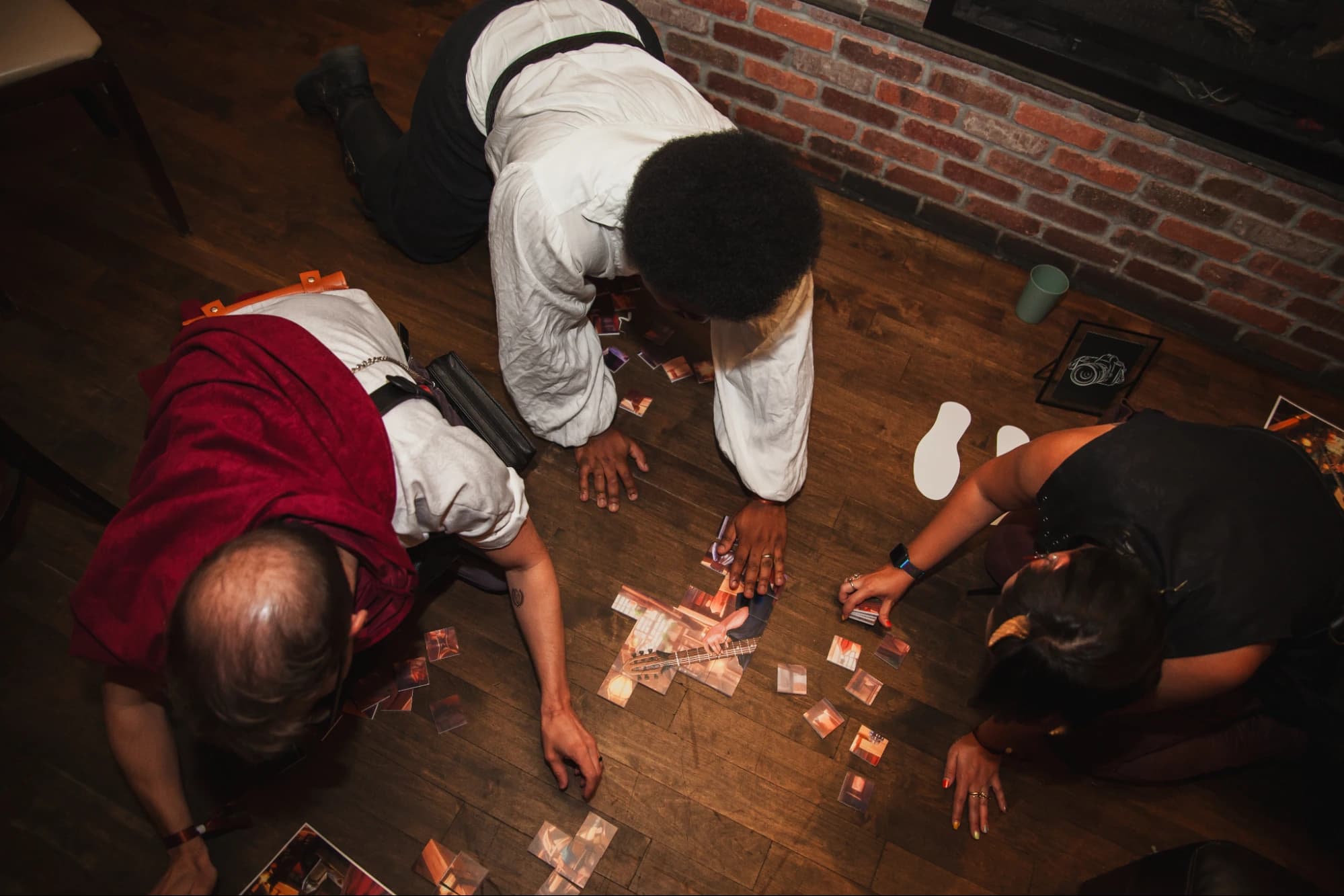
To me, this is a largely overlooked part of the immersive experience I feel that comes from TTRPG’s specifically. I’m not moving my character via controller, I’m not selecting from programmed dialogue trees, and yet I still inhabit a character who is not entirely myself. If you’ve ever felt your posture change at the table, noticed your friend taking on a persona completely foreign, or otherwise meta-observed yourself in total contrast to the “real” you, then you may have felt what I’m describing, too. The words and gestures in the game are most of what we have at our disposal to create our characterization, and yet they change everything about how I feel, and why I sit through sessions for hours at a time.
Even still, as much as I can wax poetic about how special and unparalleled TTRPG’s are as a collaborative embodied storytelling medium, there has to be more there than just the fact that the experience is fueled by choice and mediated through our physical bodies. So much of our hobby is built on rolling dice, and indeed, in certain moments it raises the stakes and keeps everyone waiting desperately for fate, and while I feel that in my body, it isn’t because my character is feeling that. When I make a character, I get super invested not just in their backstory, but also in their stats and abilities, which don’t necessarily intrigue me because of the narrative alone. What if there are other types of immersion?
Types of Immersion
Like many game designers, I find great joy in being able to categorize things into small boxes. Not only can specificity help us think deeper within these sorts of categories, but also, it’s fun! My brain just gets pleasure from the theory behind different schools of magic, skill trees , and even, in some of my more shameful moments, thinking of how I could best min-max a multiclass. In some way, all of those things immerse me. There’s been some discourse about creating a vocabulary for different ways that players experience immersion, one of my favorites coming from Mata Haggis-Burridge, who we found through the wonderful Corkboards & Curiosities. Even though this framework is primarily in dialogue with video games, I think it translates quite easily to TTRPGs. Haggis-Burridge breaks down immersion into: systems immersion, dealing with “mechanics, challenges, and rules of a game,” spatial immersion, giving a player a sense of physical space in a fictional world, social immersion, linking character and player investments, and narrative immersion, in this case meaning how a player yearns to see how events will play out. I find this structure interesting because it points out that immersion around the fictional world/story is
a) not the only type of immersion players experience
but also,
b) not a singular category or idea within itself.
Similarly, we could also look back at the categorization by TTRPG legend Ron Edwards, originally posted on the Forge as an adaptation of RGFA’s threefold: GNS, standing for Gamism, Narrativism, and Simulationism. Rather than presenting the ideas as types of immersion, Edwards thought of them as types of motivations that drive players to make types of choices, as well as a more in-depth reasoning behind the “fun” that causes us to play these games in the first place. However, any level of taxonomy also calls its own granularity into question; for some audiences it will never be enough, and for others even small amounts are too much.
I’m inclined to believe that if you are reading this far into this incredibly head-y post, then you may be the type who is, in some way, interested in this sort of thorough examination, and are likely thinking of examples of how the above may apply directly to your memories of play, or maybe just as likely, identifying gaps in these definitions coming from your experiences. Additionally, these sorts of classifications, while fun, also make me think about their necessary relationship between the analysis mindset, and the play itself, in a sort of chicken and egg paradox. Do we find immersion through these routes, these typologies and definitions (an explanation or prescription), or do we craft these as an attempt to make sense of these strange occurrences that we put ourselves through, and look back at fondly. In fairness, I actually think that these questions may not point to a cause of weakness, but rather exactly to what it is that we are trying to investigate in the first place.
In Summation
To conclude, rather unsatisfyingly, I’m not too sure I really have a precise answer to the title of this post. I’m a firm believer that definitions are only as useful as you decide. If anything in this post has reaffirmed, challenged, or inspired your personal ideas about “immersion,” then I think I did my job! I love writing, and I love thinking through theoretical frameworks, and yet more often than not, I find these avenues lead me to sparse, sometimes disconnected, descriptions of what I feel, but not to definitions properly. Like music (game idea: drink every time I compare something to music), I’m not sure if definitions can ever be “held” or nailed down; they are ephemeral despite our desire to meld them into stone, per se.
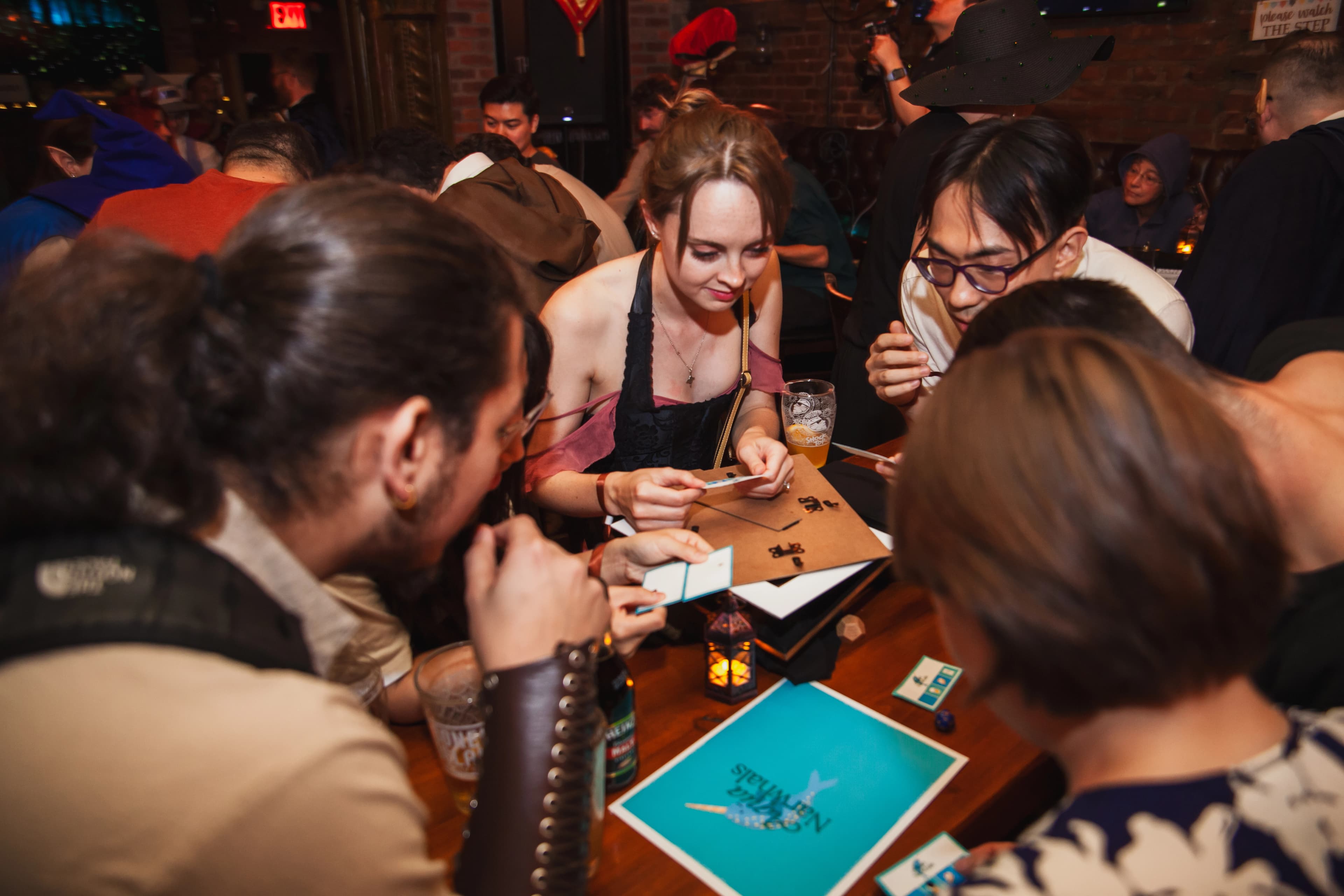
When I think of immersion for myself, I can seldom pinpoint memories where I was completely absorbed into a story world, to the point where I forgot that I was playing a game, but some of you may feel the exact opposite and know that feeling like the back of your hand. Maybe immersion to you is all of the things that I’ve questioned above, for which I celebrate your experiences. Slightly tying this back to Pocket Bard, you may recall when, at the very beginning of this post, I mentioned that I feel like immersion is used as a buzzword, so I feel somewhat responsible to explain what I think it means to us. When I think of what we do as immersive audio, I think of it as extra keys into description and narration. It is exactly the definition-less feeling that I get, because it needs no words. In some sense, it does bring the world to life, and makes me feel more grounded in my character, and helps me dive into the deep water of roleplaying. It sets the stage, and it adds additional aspects through an aural avenue. But before we get too far into the specifics of how we do that, that may be for another day.
Until our next chapter,
Austin